The Retrieval Practice Myth: Why Rereading Feels Easier Than Remembering
Retrieval practice feels harder than rereading because memory must supply the idea. Choose a low-stakes recall-and-check routine that fits your topic.

Why can a page feel familiar while the idea disappears as soon as you close the book? Retrieval practice explains the gap: rereading lets you recognize information in front of you, while remembering asks you to bring it back without that support. The harder task can feel like a worse study session, even when it gives you a clearer view of what you can actually recall.
That does not mean rereading is useless, or that every study session should become a quiz. The useful choice depends on your situation: whether the material is new, whether you can explain it, and whether you need to connect it to something else. A short recall-and-check routine can help without turning learning into a high-stakes performance.
Recognition and retrieval
When you reread a paragraph, its words and order are already supplied. You may recognize a term, follow an explanation, and feel that the page makes sense. Those are real signs of familiarity. But they do not necessarily tell you whether you could produce the explanation later, with the book closed.
Retrieval reverses the direction. Instead of seeing the answer and recognizing it, you begin with a question or cue and try to supply the answer from memory. That might mean explaining a concept aloud, sketching a diagram, or writing a few key points on scrap paper. The attempt can feel slow because the missing material is no longer visible.
Suppose a biology chapter describes how a plant uses light, water, and carbon dioxide. While reading, the process may seem obvious. With the page closed, you might remember the inputs but forget what the plant produces. That gap is useful information: it shows which part needs another look, rather than proving that the entire chapter has vanished.
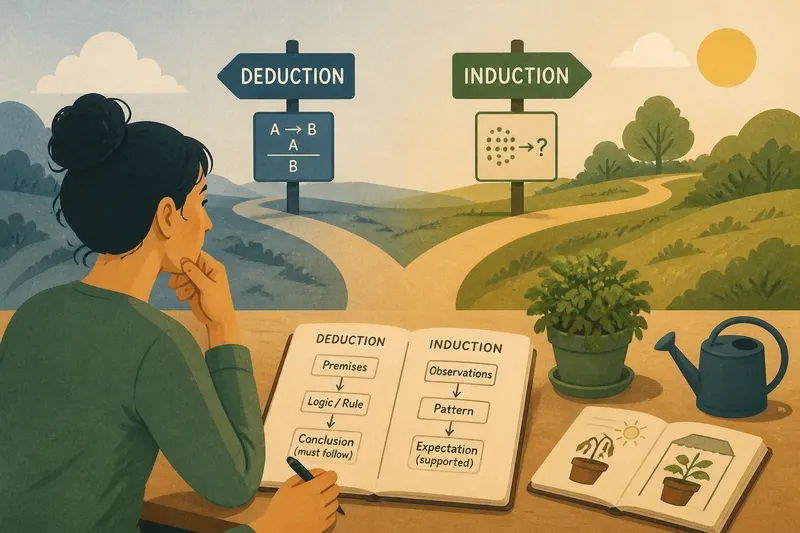
Recognition and retrieval are not rival learning methods. Rereading can introduce an unfamiliar idea or clear up confusion; retrieval can show what has become available without the text. The practical question is not “Which method is always better?” It is “What do I need from this session?”
Choose by situation
Use the mode that matches the obstacle in front of you. If the explanation is still unclear, more effortful recall may only rehearse the confusion. If the explanation makes sense but feels hard to produce, a small recall attempt can tell you where to focus.
- The topic is new. Read a small section with a clear question in mind, such as “What does this term mean?” Pause to put the explanation in your own words, then return to the text to resolve unclear parts. A little rereading fits because you need the material itself before you can sensibly recall it.
- The page looks familiar, but you cannot explain it. Close the book and write what you remember before looking back. This fits because recognition has already done its job: the next useful signal is what you can produce without the page.
- You can state the definition but not use the idea. Try a fresh, simple problem or invent a case where the concept would apply. Then check the reasoning, not just the final answer. This fits when the missing piece is using the idea, rather than recalling its wording.
- You are confused about a specific passage. Reread that passage slowly, trace the example, and mark the exact step that stops making sense. This fits better than repeatedly quizzing yourself on an explanation you do not yet understand.
- You feel pressured or tired. Make the attempt smaller: recall one question, then check it, or take a break and return later. A low-stakes task fits because a strained session can make ordinary difficulty feel like a verdict on your ability.
These choices can change within one session. You might reread a definition, close the book to explain it, then return to one sentence that corrects a gap. That is not inconsistency; each move answers a different question.
A brief recall loop
Keep the routine small enough that you will actually use it. Choose one narrow topic, not an entire chapter. Put the book or notes out of sight, attempt a response, and then check the source for what was missing or inaccurate.
- Choose a prompt. Use a heading, a question from class, or a cue you write yourself. Make it specific enough to answer in a few sentences or a quick sketch.
- Recall without looking. Write, draw, or speak what you remember. If you get stuck, leave a blank or note the question rather than immediately opening the page.
- Check the source. Compare your response with the book, notes, or worked explanation. Separate a missing detail from a misunderstanding; they call for different follow-up.
- Correct one gap. Add the missing idea in your own words, or reread the part that resolves the confusion. Avoid copying a full page when one sentence or diagram is enough.
- Try the prompt again later. Return after a pause, or use a new question about the same idea. If recall still falters, revisit the explanation before making the prompt harder.
Say you are learning how to distinguish a noun from a verb. You close your notes and write a sentence, then label each word by its role. When you check, you notice that you classified a word by its form rather than by how it works in that sentence. The useful next move is to review that distinction and try a different sentence, not to reread the whole unit from the beginning.
Keep the check calm and precise. A blank response is not a character judgment; it is a cue to identify whether you need another explanation, a smaller prompt, or a little more time. The aim is to make the next study choice clearer.
What should you recall?
Should I recall every detail?
No. Start with the central idea, the relationship between parts, or the kind of question the topic helps answer. Add details when they matter for the task, rather than treating every sentence as equally important.
What if I remember nothing?
Make the prompt narrower or look at a small cue, such as a heading, then try again. If the explanation remains unclear, reread that part and work through its example before attempting a broader recall.
Should I write or speak?
Choose the form that suits the material and your setting. Writing can make gaps easier to inspect; speaking can be quicker for an explanation or a sequence of ideas. A sketch may work better when the topic depends on how parts fit together.
How often should I revisit a topic?
Return when you have had enough time away that you cannot simply repeat the page from immediate familiarity. If recall is easy, move to a related question or use the idea; if it is shaky, check the relevant explanation and try again later.
Keep the stakes low
A recall attempt is most useful as information for your next decision, not as a score that labels you capable or incapable. You can leave out grading, timers, and elaborate tracking. A scrap of paper and a question tied to your notes are usually enough to reveal whether you need clarification or another chance to retrieve.
It is not worth the effort to turn every reading session into a strict testing ritual, or to build a complicated system of cards before you know what is confusing. Keep a few prompts for ideas you genuinely need to revisit. The routine should help you notice gaps, not become another subject to manage.
When rereading feels smoother, treat that ease as a reason to check what you can recall, not as proof that you have mastered the topic. Retrieval practice is most useful when it leads to a sensible next move: explain, check, correct, or return to the material. That small distinction can make your study time more responsive to what you actually know.